This years AFI Film Festival had a much anticipate treat for fans of the late Japanese Film Legend Toshiro Mifune with the the debut screening of MIFUNE: The Last Samurai. Directed by Oscar Winning Director Steve Okazaki who grew up watching Samurai Films starring Mifune here in Los Angeles on a bed sheet at a Japanese Community Center. As quoted by the director himself, he thought this was going to be great to go through old film clips but it turned out to be more than anticipated. You could say this documentary was more than a labor of love. We would say it was a unique insight to the origin of Samurai Film recounting the golden age of Japanese Silent films.
Those early films now mostly lost to time and war were initially based on Japanese Noh plays and later became known as "Chambara" films. The word "Chambara" comes from the sounds of clashing swords in film making. Up until Mifune entered his near accidental career, Japanese Samurai films were at best predictable and very formulaic. Enter fate. It was at the outbreak of war with China that young Manchurian born & raised Toshiro Mifune was conscripted into the Imperial Japanese Army and sent to Japan for the first time. Like many conscripts, he was mercilessly beaten by his superiors for his rebellious attitude.
Mifune later is assigned as an Aerial Photographer. Being that his father was a studio photographer who often used him as a model. At some point in World War II he was taken off flight status and assigned to a crew chief position for the Kamikaze. This is where the documentary gets deep. Director Steve Okazaki reveals in his film with the help of interviews from both family and former cast & crews that knew him that his role in the war was to see the young pilots off before their desperate suicide missions. He would tell them: "Don't say you are doing this for the Emperor. Say good bye to your mothers. Now off you go." This may have played a role in his heavy drinking after the war. It was said by his family that when the war came up he would break down in tears. One can only imagine the faces of the young pilots he unwillingly was tasked to send to their deaths. It was clear in his eyes when he played Admiral Yamamoto in Tora Tora Tora this sense of guilt and burden he carried.
Like many returning soldiers returning to Japan after the war's end, Mifune sought to find work in Tokyo. Being that he had been a photographer, he applied at Toho Studios. But for some reason his application was submitted for an acting position instead of the photographer position he had wanted. He failed miserably and became enraged. Lucky for us that legendary director Akira Kurosawa saw something in him and cast him for his early post war films. It would not be until after 1950 when the American Occupation ban on films made with swords that the most iconic Samurai film of all time directed by Kurosawa starred Mifune in The Seven Samurai.
Seven Samurai became an international hit and back home in Japan it redefined Samurai film. No longer were "Chambara" films made. Rather, films explored what became known in the West as "The Anti-Hero." Mifune's presence was so large, he would star in many films with Kurosawa such as Rashomon, Throne of Blood, Yojimbo, Sanjuro, Red Beard, and The Hidden Fortress which became the inspiration for Star Wars. This documentary contains a literal who's who of Japanese acting greats and former crews who worked with Mifune. They got everybody they could find but Tatsuya Nakadai. Trust me, we asked! We feel that as far as documentary films go, Steve Okazaki has presented Mifune fans a real treat. Just seeing film clips from the Samurai Trilogy on the big screen makes you want to leap out of your seat with excitement and joy that only a Mifune film could inspire. This film which surprisingly is narrated by Keanu Reeves (Whoa!) is a must for any Toshiro Mifune fan. We at American Mishima congratulate Director Steve Okazaki for this cinematic delight! That beinbg said, we have to let you know that this will be screened on limited release in December 2016 in Los Angeles, San Francisco, and New York City. If you can not see this in those cities, we recommend you look out for it when it becomes available on Amazon or Netflix. Please Enjoy!
Legendary film great Toshiro Mifune is set to get a star on Hollywood's Walk of Fame in 2016. Mifune (1920-1997) who served as an aerial photographer in Manchuria during WWII never intended to be an actor. He had heard the Toho Studios needed some electricians and applied for work. But when he arrived for the interview and asked to read some lines on a script, he exploded and stormed out of the interview. Luckily for us, his temperament caught the eye of film director Akira Kurosawa who chased after him and talked him into being in his movie and the rest is history. He would go on to be known in the West as the "John Wayne of Japan." Mifune initially starred in early post war film noir films like The Lower Depths but quickly became known for his role in the Seven Samurai, a role which became his all time favorite. He would go on to play such legendary Samurai roles such as The Musashi Samurai Trilogy, Yojimbo, Sanjuro, Red Lion, Red Beard, and others. While no date has been released as to when the ceremony will take place, yours truly will try to be there. To date, Akira Kurosawa does not have a star but his star that he created will.This is an honor that is long overdo and we at American Mishima are happy to see it happen.
How far would one go to follow their dreams? This is the moral dilemma vividly told in the 2013 Ghibli / Toho Studios animated masterpiece written and directed by famed animator-director Hayao Miyazaki in what he declares to be his last film which has been described as a animated historical fantasy. The Wind Rises follows the real life aeronautical engineer Jiro Horikoshi who developed Japan's most famous fighter plane the Mitsubishi A6M Zero into the historical chronological order of Japan's airplane development and that of the fictionalized personal life of the plane's chief designer.
Inspired by the manga and further based on the short story by Tatsuo Hori, Miyazaki sought out to create the world of Pre-War Japan. Starting in the Taisho Era we are introduced to Jiro as a young boy who dreams of climbing atop the roof of his rural family home and taking flight aboard a small bird-like airplane which he alone pilots over the pastoral picturesque countryside of Japan. A literal flight of fancy any boy could have had dreaming of soaring through the skies. But then his dreams are rudely intruded upon by the dark specter of a large Zeppelin with Iron Crosses raining down bombs destroying Jiro's beautiful dream. It is the first of many dreams Director Miyazaki will take the audience through to illustrate Jiro's moral dilemma he had yet to understand. And to set upon this vision Jiro is inspired by the latest aviation magazine that features an article of the famed real life early Italian aeronautical engineer Giovanni Battista Caproni.
At first Jiro dreams of seeing skies filled with heavy Italian bomber planes lumbering overhead. But when Caproni makes an unexpected appearance demanding to know what this young Japanese boy is doing in his dream, the two realize they both share the same dreams. And then Caproni makes one observation of the near-sighted boy. “You'll never fly with bad sight. But that does not mean you can not design planes that will!”
Upon awakening, young Jiro declares to his mother that he will become an aeronautical engineer! From that moment forth, Caproni serves as both inspiration and as his dream mentor who will advise him throughout the film's progression thus embarking Jiro onto a quest to build the airplane of his dreams. But as fate would have it, Jiro would not embark on his quest alone.
It is by fate that Jiro rides aboard the train to the University where he catches the attention of a young girl named Naoko Satomi. But before the young engineering student can get acquainted, tragedy strikes in the form of the Great Kanto Quake of 1923. As the train was forced to come to a halt, it's boilers became in danger of blowing thus forcing the evacuation of it's passengers. In doing so, Naoko's handmaiden's leg is injured. Jiro comes to their aid and without giving his name delivers Naoko and her maiden to their family home in Uneo. As Jiro returns to the university he is joined by his chain smoking friend Kiro Honjo (designer of the GM4 bomber) who had exhaustively saved the mountains of text books from the burning buildings that have engulfed both the university and the Tokyo Cityscape in flames and ash. While Honjo is convinced that Tokyo is finished, it is Jiro's mentor Caproni who asks him “Hey Japanese boy! Does the wind still rise?”
Like Tokyo itself, Jiro's dreams of becoming an engineer are revived with new life and vigor. But as he continues on his path he has not forgotten the young girl he had met on that train and is further thought of when a mystery woman delivered a token of gratitude for saving the Satomi girls. Instinctively, he races home to his apartment to find the woman but instead discovers his own younger sister Kayo awaiting to scold him for not visiting home. It is Kayo's desire to become a doctor and in such Jiro offer's his support so she may go on to study medicine. A decision that will play an integral role in his future.
Upon graduating university, Jiro lands himself a job with Mitsubishi. It is there he meets his new boss Kurokawa. Mr. Kurokawa is short in stature and large on demands as he tells Jiro on his first day that he is late. “Late? I was told to come anytime in April.”-“If we told you April that means get you here in March!” Kurokawa scolded. Undaunted, Jiro gets right to work on a airplane strut he has been handed by his boss as a test to which he knows is an inferior design. As Jiro later dines with his old classmate and fellow engineer Honjo, he discovers the curved shape of a Mackerel bone in his Saba dinner. This proves inspiration for a flexible strut design. But ultimately, the plane breaks apart in flight nearly killing the pilot leaving Jiro with a moment of doubt when out of nowhere his old mentor Caproni appears. “What kind of world would you like to live in? Do you prefer one with pyramids or with no pyramids? You know airplanes are fated to slaughter and destruction, So what kind of world would you live in?” asked Caproni. “I prefer one with pyramids,” answered Jiro. And in such he remains ever committed to designing the perfect airplane. But as the Army contract is awarded to a rival aircraft company, Jiro and Honjo are sent to Germany to obtain license to Junkers designs.
While Germany displays it's most technological achievements in aeronautical design, it proves to be a very unfriendly place. At this point of the story history will recall the rise of the Nazi party, it's thugs and racial attitudes are present even if the Swastika and uniformed storm troopers are not. The visiting Japanese Engineers are not given the welcome or access to the all metal Junkers planes they were promised. In one unauthorized up close inspection of a partially disassembled wing, Jiro realized just how far behind Japan was. Honjo complained how in Germany the plant is right next to the air field and planes are towed unlike in Japan where their planes are pulled by oxen. It became Jiro's mission to somehow close the technology gap.
Upon Jiro's return to Japan, he is awarded the position of chief designer for a new Japanese fighter commissioned by Japan's Navy. But for some unknown reason, Kurokawa and the Company's president has to smuggle Jiro away from the plant as he is now wanted by the Special Police. Kurokawa decides to send Jiro to hide out at a countryside resort until the situation dies down. It is there while making paper airplane models he catches the eye of a young woman.
She turns out to be none other than a grown up Naoko who instantly recognized Jiro. And thus begins a most romantic courtship as the two become reacquainted. But as fate would have it, not only were they brought back together, the appearance of a strange German Engineer named Castorp seeking to forget Hitler's thuggery who prompts Jiro through German song that “This moment will not last Forever.” Seizing upon that notion, Jiro spontaneously asks Naoko's father for her hand in marriage to which she joyously accepts.
But before bliss can ensue, Naoko reveals a most tragic revelation. She like her mother has contracted tuberculosis and wishes to live apart until she can be healed, something no one wishes to acknowledge can be done.
As Jiro comes ever closer to making his design prototype of the Mitsubishi A5M (the fore runner of the A6M Zero) into a flying reality, Naoko's condition becomes worse. Noako decides to leave the Sanatorium and join Jiro still in hiding at Kurokawa's house. Not approving of an unwed couple living together, Jiro and Noako ask the Kurokawa's to marry them which his boss reluctantly agrees. Knowing fully that she will die Jiro declares that every moment is precious. This of course does not sit well with his sister Kayo who as a medical intern knows her condition is far worse than Naoko admits to. “This marriage will end badly,” she warns. And in a tearful gust of wind, he knows.
Much has been said of The Wind Rises from the usual bitterness of Beijing to the constant condemnations of Korea. All from which critics have likely not seen this film nor will do so under the same tired old cries of Japan trying to gloss over it's wartime past. In regards to this film, none of these things are true.
Jiro is haunted throughout the film by apocalyptic visions of Japan's inevitable fate. And as Jiro contemplates the cost in human lives his creation had swallowed, it is his dream mentor Caproni who reminds him that in the end he had achieved his dream to build a perfect plane. And in doing so we can say in the defense of this film to it's American critics who demand to know “why would you want to make a film about a man who built the plane that killed so many Americans?” Miyazaki could quote the real life Jiro Horikoshi when he most famously said; “All I wanted to do was to make something beautiful." We could not agree more.
Last night I was invited as a member of the Screen Actors Guild Film Society to a last minute screening of the 2009 Japanese film Dare mo mamotte kurenai – Nobody to Watch Over Me.
I had not heard of this latest film from Toho Studios but when I learned that it had been Oscar nominated to represent Japan in the category for best foreign film, I instantly jumped on this. As an added bonus, Director Ryoichi Kimizuka, and lead actress Mirai Shida would be there for a pre-film meet and greet session. To use my favorite Pulp Fiction quote- “Shit! – Well that’s all you had to say!
Shot entirely on location in Tokyo and the West Izu Peninsula, Nobody to Watch Over Me deals with the impact and cries for retribution from the family members of an accused murderer. In this film an eighteen year old school boy is accused of killing two grade school age sisters. No sooner than the Tokyo Police is on the scene the Japanese media is all over it with unrelentless pursuit of the accused family members. The young Mirai Shida plays Saori Funamura who is whisked away from school by the police and brought home to the media frenzy that takes place outside her home. Her entire world is instantly turned upside down as the Funamura household is overwhelmed with police detectives and special detachments from the courts and the schools.
Everything happens in such a fast pace that there is no opportunity for 15 year old Saori to absorb what is happening to her family. No sooner than her brother is whisked away by the police his name and picture is all over the internet and the Tokyo media as well as the identities and whereabouts of the accused family. The police and courts force their parents to instantly divorce and remarry under Saori’s mother’s maiden name as the police outside cover the Funamura name with packing tape. The decision is made to pull Saori out of school and separate the family. Saori has no choice in the matter and has no time to understand what is happening to her family as cries for vengeance to be exacted on the Funamura family flash all over the internet and Japanese Media.
Koichi Sato plays Takumi Katsuura, A Tokyo detective assigned to protect young Saori. Together with his partner played by Ryuhei Matsuda of Gahatto (Taboo) fame, they race across Tokyo while being hunted down by the media in high speed chase scenes that makes you think of Princess Diana’s last car ride. There is nowhere Katsuura can take Saori who is now marked for death by vicious internet bulletin boards run by evil nerd techno geeks inciting calls for death to all the surviving Funamura family members.
The issue here is the girl has done nothing wrong yet people are blaming her and her family for the twin sisters murders her older disturbed brother is accused of committing. It is the Police who enact measures to assist the families and ensure that the families to not attempt suicide. This of course does not always work out as planned for even within the police there is predjudice and outright conviction in the court of public opinion.
The fast pace of the first 24 hours in this four day ordeal proves too much as Saori finds out via her teenage boyfriend that her mother committed suicide no sooner than the family was separated. It seems like there is no one she can trust as public outcries call her death. The only person she can rely on is Detective Katsuura who has been assigned this task of protecting Saori at the expense of a planned vacation trip planned by his own 15 year old daughter to save his own family from an impending divorce. The timing of this assignment could not be any worse as now internet and media are revealing the home address of detective Katsuura whose family is now recieving death threats of thier own. Katsuura has no easy choices as the vicious Japanese media airs out old accusations against the detective for failing to stop a child murder he was tailing three years earlier. He is accused of protecting murderers at public tax expense. This of course is an unfair call and Katsuura has to face his own demons that has all but destroyed his own family to save the life of Saori’s.
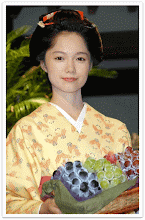
(Left photo) Me With Mira Shida
(Right photo) Mira Shida with Director Ryoichi Kimizuka
I won’t give away any more of this film for you. The stand out performances by Koichi Sato and Mirai Shida are both memorable and Oscar worth. What struck me as my own sign of good luck was that they film the second half of the film on the West Izu Peninsula which is the area where my fictional historical novel takes place. I couldn’t help but literally leap out of my chair to see on the big screen a land I am writing about come to life. The screening took place at Raleigh Studios’s Chaplain Theater. This was preceeded by the most awkward moment when the Director Ryoichi Kimizuka and actress Mirai Shida’s van was denied entrance by a determined Security guard who I swear had it not been some black rap star showing up he would have denied entry to Al Pacino & Robert De Niro even if they came in character with Joe Pesci in tow. Inevitably, both the stars and producers were finally let on the Raleigh lot. I swear I have snuck into bigger studios with less hassle. Baka!
Once we were all up in the lot the producers and cast were there to individually meet and greet the selected guests. Naturally, they were not expecting me or anyone else who spoke Japanese. As you could imagine they were quite happy to meet me & the Tinahime.
We introduced ourselves and customarily bowed as they happily did the same. We wished them all a Happy New Years and great success with the film. Mirai Shida was nice enough to pose for a picture with me and later tried to give a prewritten speech to the non-Japanese speaking audience in English. She was very delightful and I wish her great success. Dare mo mamotte kurenai is both a controversial film and deals with the difficult subject in Japanese culture. This has all the drama and heart you would expect from a Toho Studios film. This film may already be available in DVD. See this however you can. You will not be disappointed!
“American Mishima” is the work of Louis Rosas, the son of Mexican Immigrants, whose father served in Vietnam for the US Army and who grew up on glamorized war films and military aviation in the sleepy seaside plains of Oxnard, Calif. With an early fascination of the Second World War embedded in his young mind during the post-Vietnam era, it was his exposure to Akira Kurosawa's samurai epic Ran (Toho, 1985) that changed his views of war while creating a lasting impression of Japanese culture and history. Further inspired by the works of Japanese writer Yukio Mishima, Rosas would go on to study Japanese language and swordsmanship, which led him to the practice of Shingon Buddhism and Shinto. Rosas is also a former student of Shinkendo, the ideal and practice of the samurai code of Bushido in the modern world, which helped shape the creative force that is “American Mishima.”


 Mifune later is assigned as an Aerial Photographer. Being that his father was a studio photographer who often used him as a model. At some point in World War II he was taken off flight status and assigned to a crew chief position for the Kamikaze. This is where the documentary gets deep. Director Steve Okazaki reveals in his film with the help of interviews from both family and former cast & crews that knew him that his role in the war was to see the young pilots off before their desperate suicide missions. He would tell them: "Don't say you are doing this for the Emperor. Say good bye to your mothers. Now off you go." This may have played a role in his heavy drinking after the war. It was said by his family that when the war came up he would break down in tears. One can only imagine the faces of the young pilots he unwillingly was tasked to send to their deaths. It was clear in his eyes when he played Admiral Yamamoto in Tora Tora Tora this sense of guilt and burden he carried.


 Posts